Share This Article
Have you ever stood in front of your closet feeling frustrated because nothing seems to look quite right? Or wondered why your friend looks stunning in colors that make you appear washed out? The answer might lie in understanding your seasonal color type. A seasonal color analysis quiz is the fastest, most accessible way to discover which colors enhance your natural beauty and which ones work against you.
In this comprehensive guide, I’ll walk you through everything you need to know about taking a seasonal color analysis quiz. You’ll discover how these quizzes work, what makes them accurate, and how to interpret your results for real-world application. Whether you’re struggling with wardrobe choices, spending money on clothes you never wear, or simply curious about optimizing your appearance, this amazing resource will transform your relationship with color.
Understanding Seasonal Color Analysis Quizzes
Before diving into quiz options, let’s explore what seasonal color analysis actually measures and why it matters for your everyday style choices.
What Is Seasonal Color Analysis?
Seasonal color analysis is a system that categorizes individuals into color “seasons” based on their natural coloring, including skin tone, hair color, and eye color. The concept originated in the 1980s with Carole Jackson’s book “Color Me Beautiful” and has evolved significantly since then.
The basic premise is simple: certain colors harmonize with your natural coloring while others clash. When you wear your best colors, your skin appears clearer, your eyes seem brighter, and you require less makeup to look polished. Conversely, wrong colors can make you look tired, sallow, or washed out.
Modern color analysis has evolved from the original four seasons (Spring, Summer, Autumn, Winter) to more nuanced systems, including 12 seasons, 16 seasons, and even more detailed classifications. Each system provides increasingly specific color recommendations.
How Seasonal Color Analysis Quizzes Work
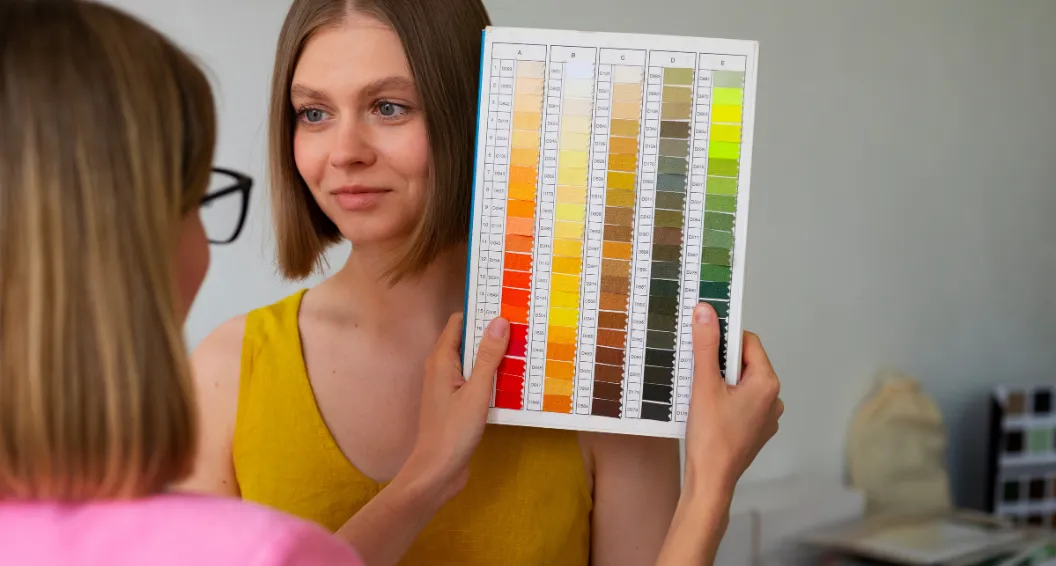
A seasonal color analysis quiz evaluates your coloring characteristics through a series of questions or photo analysis. These quizzes typically assess your undertones (warm, cool, or neutral), your value (light, medium, or dark), and your chroma (bright/clear or muted/soft).
Key factors these quizzes evaluate:
- Skin undertones – the subtle hue beneath your skin’s surface (golden, pink, or neutral)
- Hair color depth and tone – from platinum blonde to jet black, warm to cool
- Eye color and pattern – not just the dominant color, but flecks and rings
- Contrast level – the difference between your hair, skin, and eyes
- How you tan or burn reveals your skin’s response to sun exposure
In my experience helping people discover their seasons, I’ve found that the most accurate quizzes consider all these factors rather than relying on just one or two characteristics.
Types of Seasonal Color Analysis Quizzes Available
Not all color analysis quizzes are created equal. Understanding the different types helps you choose the right one for your needs.
Free Online Quiz Options
Free seasonal color analysis quizzes provide an accessible starting point for discovering your season. These typically ask 10-20 questions about your natural coloring and style preferences.
Popular free quiz platforms include:
- Pinterest and blog-based quizzes – often simplified versions focusing on the four basic seasons
- Color analysis company websites – usually more detailed to introduce their services
- YouTube personality quizzes – interactive and often include visual examples
- Reddit community quizzes – crowd-sourced options with community feedback
The advantage of free quizzes is obvious: no financial commitment. However, they vary widely in accuracy. Some use outdated methods or oversimplified questions that may not capture your unique coloring nuances.
Photo-Based Analysis Quizzes
Photo-based seasonal color analysis quizzes analyze your appearance from uploaded photos rather than relying on your self-assessment. This approach can be more objective since many people struggle to describe their own coloring accurately.
How photo analysis quizzes work:
- You upload clear, well-lit photos (usually without makeup)
- The quiz analyzes your skin tone, hair color, and eye color
- Some use AI technology while others involve human analysts
- Results provide your season with detailed color recommendations
I’ve found that photo-based quizzes tend to be more accurate than self-assessment quizzes, particularly for people who aren’t sure about their undertones. Natural lighting is crucial, so take photos near a window during the day without direct sun hitting your face.
Professional Online Analysis Services
For the most accurate results, professional online seasonal color analysis services combine quiz elements with expert evaluation. These typically cost between $30-$200, depending on the depth of analysis.
What professional services offer:
- Detailed questionnaires about your coloring
- Multiple photo submissions from different angles
- Analysis by certified color consultants
- Comprehensive reports with color swatches
- Personalized recommendations for makeup, hair, and wardrobe
While more expensive, professional analysis eliminates guesswork and provides resources you’ll use for years. Many people find this investment worthwhile given how much money they’ve wasted on unflattering clothes.
DIY At-Home Quiz Methods
You can conduct your own seasonal color analysis quiz at home using simple tests and observations. This approach requires more time and attention but costs nothing beyond the materials you likely already own.
DIY analysis steps:
- The jewelry test – Hold silver and gold jewelry near your face in natural light. Which makes your skin glow?
- The white test – Compare ivory/cream white versus bright white near your face. Which looks better?
- Test on the vein -observe your veins in the wrists. Blue/purple suggests cool undertones; green suggests warm.
- The draping test – Hold different colored fabrics near your face and observe which harmonize and clash
The key is being honest and objective. Take photos during each test so you can compare later. I recommend having a friend help, as they can often see what you miss.
How to Take a Seasonal Color Analysis Quiz Effectively
Getting accurate results from any seasonal color analysis quiz requires proper preparation and honest self-assessment.
Preparing for Your Quiz
Preparation significantly impacts your quiz accuracy, whether it’s a free online version or a professional analysis.
Essential preparation steps:
- Remove makeup completely – even “natural” makeup alters your true coloring
- Gather natural light – take quizzes or photos near windows during the daytime
- Tie back your hair – your face should be fully visible
- Wear neutral clothing – white, gray, or beige to avoid color interference
- Have recent photos ready – photos from different times of day and seasons
Don’t overthink your answers. Your first instinct is often correct. If you’ve dyed your hair, consider both your current color and your natural color, as both matter for comprehensive analysis.
Answering Questions Accurately
Many people struggle with quiz questions because they’re unsure what the questions are really asking. Let me clarify common confusion points.
Understanding tricky questions:
- “What are your undertones?” – If unsure, use the jewelry and vein tests mentioned earlier
- “Do you look better in silver or gold?” – This isn’t about preference; it’s about which makes your skin glow
- “What colors do you receive compliments in?” – Note: compliments on the clothing don’t count; it’s compliments on how you look
- “How does your skin react to the sun?” – Be honest about burning versus tanning patterns.
When questions offer multiple choice answers, choose the option that describes you most of the time, not occasionally. Seasonal coloring is about your dominant characteristics.
Interpreting Your Quiz Results
Once you receive your seasonal color analysis quiz results, understanding what they mean practically is crucial.
Your result might indicate:
- One of four seasons – Spring, Summer, Autumn, or Winter (broad categorization)
- One of 12 seasons – such as Soft Summer, True Autumn, or Bright Winter (more specific)
- One of 16 seasons – even more nuanced subcategories
- Percentage breakdowns – some quizzes show you learn 70% Winter, 30% Summer
Don’t panic if your results don’t perfectly match one season. Many people are “on the cusp” between two related seasons. In these cases, explore colors from both palettes and see which works best in practice.
Best Free Seasonal Color Analysis Quizzes to Try
Let me share the most reliable free options I’ve tested and recommended to clients over the years.
Top-Rated Free Quiz Options
The Laurie Loo Quiz – One of the most comprehensive free options, this quiz asks detailed questions about your coloring and provides results for the 12-season system. It includes visual examples to help you answer accurately.
Vivaldi Color Analysis Quiz – This interactive quiz uses a step-by-step approach, narrowing down your season through elimination. It’s particularly good for beginners who aren’t familiar with color analysis terminology.
Color Me Beautiful Quiz – Based on the original four-season system, this classic quiz provides a solid foundation. While less nuanced than 12-season systems, it’s an excellent starting point.
Seasonal Color Analysis Subreddit Resources – The r/coloranalysis community offers free quiz links and, more valuably, feedback on your results from experienced members.
Quiz Features That Indicate Quality
Not sure if a seasonal color analysis quiz is worth your time? Look for these quality indicators:
Markers of a good quiz:
- Asks 15+ questions minimum
- Includes questions about multiple factors (not just skin tone)
- Provides visual examples to clarify questions
- Explains the reasoning behind the results
- Offers specific color recommendations, not just season names
- Acknowledges that some people fall between seasons
- Doesn’t require payment for basic results
Avoid quizzes that determine your season from just 3-5 questions or rely solely on your favorite colors. Personal preferences don’t determine what actually flatters you.
Common Mistakes When Taking Color Analysis Quizzes
Even with the best seasonal color analysis quiz, certain errors can skew your results. Let me help you avoid these pitfalls.
Inaccurate Self-Assessment Issues
The biggest challenge with self-assessment quizzes is, well, accurately assessing yourself. We all have biases about our appearance that cloud objectivity.
Common self-assessment mistakes:
- Describing dyed hair as your natural color – always consider your virgin hair color
- Confusing surface redness with undertones – temporary redness from rosacea or sensitivity isn’t your undertone
- Letting color preferences influence answers – you might love yellow, but that doesn’t mean it flatters you
- Assuming tanning changes your season – a tan might temporarily shift your value, but your undertones remain constant
I’ve worked with many people who initially misidentified their season because they answered based on what they wished their coloring was rather than what it actually is. Honesty is essential.
Technical Errors with Photo-Based Quizzes
Photo-based quizzes are only as good as the photos you provide. Poor photo quality leads to inaccurate analysis.
Photo mistakes to avoid:
- Using photos with filters or heavy editing
- Submitting photos in artificial yellow lighting
- Taking photos in direct sunlight (creates harsh shadows)
- Wearing makeup or having hair covering your face
- Using old photos when your coloring has changed
The best photos are taken near a window (not in direct sun) on an overcast day. This provides even, natural lighting without harsh shadows or color casts.
Ignoring the Bigger Picture
Some people take a single quiz, get results they don’t like or don’t understand, and give up on color analysis entirely. This is a mistake.
Better approach:
- Take multiple quizzes from different sources
- Compare results for consistency
- Post photos in color analysis communities for feedback
- Experiment with recommended colors in person
- Give it time, as sometimes understanding your season takes trial and error
Remember, seasonal color analysis is a tool, not a rigid rule. If a recommended color makes you feel amazing and confident, wear it regardless of technical “rules.”

Applying Your Quiz Results to Real Life
Discovering your season is just the beginning. The real value comes from applying this knowledge to your wardrobe, makeup, and overall style.
Building Your Seasonal Wardrobe
Once you know your season from a seasonal color analysis quiz, start building a wardrobe that flatters you consistently.
Strategic wardrobe implementation:
- Identify your neutral base – Every season has flattering neutrals for building a foundation
- Add accent colors gradually – Introduce your best colors through accessories first
- Audit existing clothes – Identify which pieces work with your palette and which don’t
- Shop strategically – Bring color swatches when shopping to match items to your palette
- Create capsule combinations – Mix and match pieces within your color family
You don’t need to replace everything overnight. Start with pieces worn near your face (tops, scarves, jewelry), where color impact is greatest. Bottoms and shoes can be more flexible.
Makeup and Hair Color Guidance
Your seasonal colors extend beyond clothing to makeup and hair color choices.
Makeup application:
- Choose a foundation with undertones matching your season (warm, cool, or neutral)
- Select eyeshadow, blush, and lipstick from your seasonal palette
- Use your season’s metal (gold or silver) for shimmer products
- Apply your best colors for special occasions when you want to look your absolute best
Hair color considerations:
- Stay within your season’s color family for natural-looking results
- Consider your depth (light, medium, dark) when choosing shades
- Ask your colorist about your seasonal palette before major color changes
- Remember that dramatic hair color changes might shift your seasonal classification
Conclusion: Transform Your Style with the Right Quiz
Taking a seasonal color analysis quiz is the essential first step toward a more flattering, cohesive, and confident personal style. By understanding which colors harmonize with your natural coloring, you’ll make smarter shopping decisions, feel better in your clothes, and present your best self to the world.
Remember, the ultimate goal isn’t perfection: it’s discovering the amazing colors that make you look and feel your best. Start with a free quiz to identify your season, then experiment with recommended colors to see the difference in person. Many people are surprised by how dramatically the right colors impact their appearance.
The beauty of seasonal color analysis is how it simplifies everything. No more guessing, no more wasting money on clothes you never wear, and no more standing in front of your closet feeling frustrated. Your personalized color palette becomes a reliable roadmap for every style decision.
Have you taken a seasonal color analysis quiz? What season did you discover you are, and has it changed how you shop for clothes? Share your experience in the comments below: I’d love to hear about your color analysis journey and help answer any questions about interpreting or applying your results!
Frequently Asked Questions
Are free seasonal color analysis quizzes accurate?
They’re a good starting point, but accuracy varies. Detailed quizzes or AI/photo-based tools give better results.
How do I know if my quiz results are correct?
Test by wearing your palette colors, if you look brighter and get compliments, your results are likely accurate.
Can seasonal color analysis results change over time?
Not usually. Undertones stay the same, but hair or skin tone changes may slightly shift your subtype.
What’s the difference between 4-, 12-, and 16-season quizzes?
The 4-season quiz gives basics; 12- and 16-season systems add subtypes for more personalized color matches.
Should men take seasonal color analysis quizzes?
Yes! Men benefit too: it helps choose flattering colors for shirts, ties, and suits that enhance their look.