


Share This Article
My mother stood in a department store dressing room a few years ago, near tears. She’d tried on eleven dresses. Every single one made her feel either invisible or overdressed, whether it was a frumpy jersey wrap or a sparkly cocktail disaster, with nothing in between.
She sent me a picture text and wrote, “Why can’t I just look nice? That question stuck with me. Because she was right. Finding dresses for mature women that feel genuinely stylish (not matronly, not trying-too-hard) is harder than it should be.
The good news? It’s absolutely possible. I’ve spent a lot of time (with my mum and, honestly, for myself now) figuring out what actually works. Not just what fashion magazines say “should” work, but what really flatters a woman over 50 in real life, on a real Tuesday, going to a real event.
Here’s what we figured out together.
Why Most Dress Advice for Mature Women Misses the Point
Most style guides for women over 50 are either patronizing (“cover your arms!”) or totally unrealistic (featuring a 52-year-old who looks like she’s been doing hot yoga since 1998). Neither helps.
The “age-appropriate” trap
The phrase “age-appropriate” has done more damage to women’s wardrobes than bad lighting ever could. It implies there’s a line you cross where you’re no longer allowed to wear what you like. There isn’t. What there is, though, is a matter of fit and proportion, and those matters at every age.
A mini dress doesn’t look bad on a 60-year-old because she’s 60. It looks bad if the proportions don’t flatter her specific body. The same logic applies at 30.
Bodies genuinely change, and that’s fine.
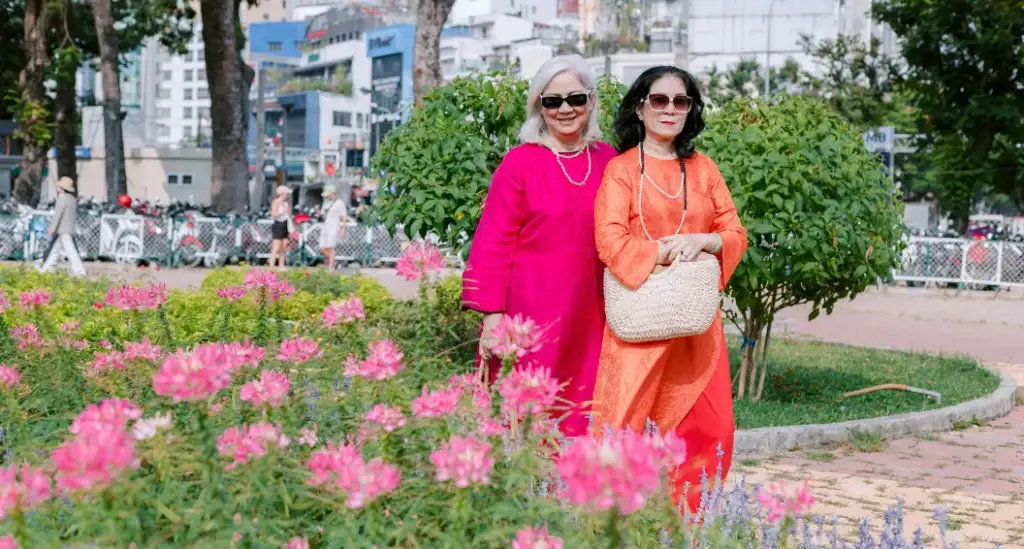
Here’s what nobody says plainly: after menopause, most women carry weight differently. The waist thickens a little. The bust shifts. Fabric that once draped beautifully now does something strange at the hip. This isn’t failure. It’s biology. And the solution isn’t to hide, it’s to redirect.
When my mum stopped trying to dress the body she had at 40 and started dressing the one she has now, everything got easier. She looks incredible. Genuinely.
The Silhouettes That Actually Flatter Women Over 50
Not every shape works for everybody, obviously. But certain silhouettes have a remarkable success rate across a wide range of figures. These are the ones I’ve seen work again and again.
The wrap dress (the classic for a reason)
The wrap dress is not a cliché, it’s a solution. The diagonal neckline creates a long, vertical line. The adjustable waist tie means you control where it sits. And because the fit relies on wrapping rather than fixed seams, it accommodates a range of shapes naturally.
Where it can go wrong: cheap fabric. If the material is too thin or too clingy, it clings in the wrong places. Look for a medium-weight jersey or crepe. Diane von Furstenberg (the inventor of the modern wrap) makes exceptional ones, but M&S and Boden both do very solid options at a fraction of the price, around £45–£80.
A-line dresses
An A-line skims the hips and falls outward from the waist. It’s forgiving at the midsection, doesn’t cling to the thighs, and creates a lovely, balanced line from waist to hem. Knee-length or just-below is the sweet spot for most women, long enough to feel elegant, short enough to feel current.
What surprised me is how differently two A-line dresses can look depending on the fabric. A stiff cotton A-line can feel dowdy. The same shape in a fluid linen or a soft wool blend reads as chic. Pay attention to drape, not just shape.
Shirt dresses (the underrated one)
The shirt dress gets slept on. A well-cut shirt dress (preferably with a defined collar and some structure) is incredibly versatile. Belted at the natural waist, it creates shape. Worn loose, it’s relaxed and polished. Midi-length shirt dresses in particular have had a serious fashion moment that isn’t going away.
Whistles and & Other Stories do great ones. Expect to spend £80–£150 for something that’ll last years.
What to approach with caution
- Body-con styles: Not because of age, but because they require specific undergarment planning that’s often more effort than it’s worth.
- Very stiff fabrics: Brocade and heavy taffeta can add visual bulk. Wear them strategically.
- Empire waist styles: They can be lovely, but often read as maternal rather than elegant.
Fabric Is Everything: Here’s What to Choose
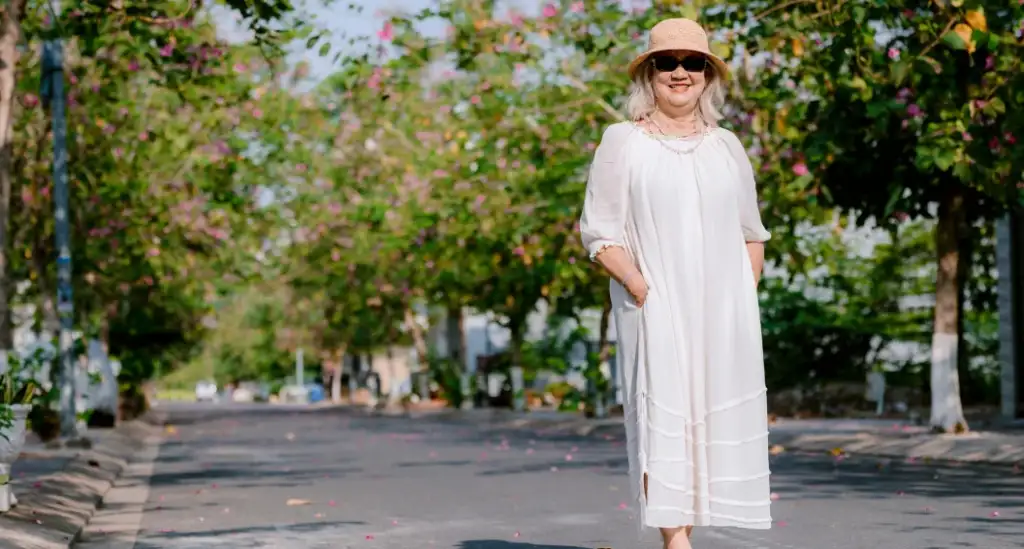
This is the thing I wish someone had told me (and my mum) years earlier. You can have the perfect cut, the right colour, the ideal length, and a bad fabric will ruin everything.
Fabrics that work beautifully
| Fabric | Why It Works | Best For |
| Crepe | Drapes without clinging; hides texture | Evening wear, smart casual |
| Jersey (mid-weight) | Moves with the body; forgiving | Day wear, travel |
| Linen | Structured but breathable; elegant | Summer, daytime events |
| Ponte | Holds its shape; very stable | Work, structured dresses |
| Silk/silk blend | Luxurious drape and movement | Special occasions |
Fabrics to avoid (mostly)
Thin polyester. Full stop. It clings, it static-sticks, it doesn’t breathe, and it photographs terribly. Even if the cut is good, thin poly will undercut it. The same goes for very sheer fabrics unless they’re lined.
The biggest mistake my mum made for years was buying dresses based on price-per-wear logic without factoring in fabric quality. A £35 polyester dress worn once beats nothing. A £95 crepe dress worn twelve times beats everything.
Colour and Pattern: Confident Choices, Not Safe Ones
There’s a tendency in fashion advice for mature women to nudge everyone toward navy, taupe, and “classic” neutrals. Which is fine! But limiting yourself to safe colours is its own kind of style mistake.
Colour rules worth keeping
The one colour consideration that genuinely matters more after 50 is what sits near your face. As skin tone changes and hair colour shifts (going grey, going lighter), colours that previously looked flattering can suddenly feel draining. It’s worth doing a proper colour analysis at least once, not because the rules are rigid, but because knowing your season saves a lot of trial and error.
“The moment my mum switched from navy to a deep teal, three people told her she looked ten years younger. Same cut, same occasion. Different colour near her face.”
Pattern guidance
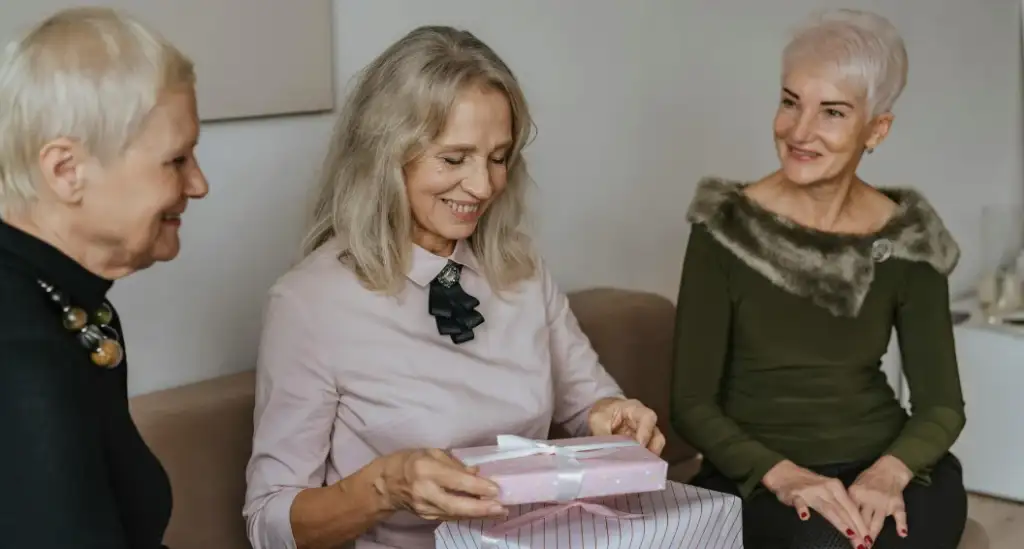
Large-scale prints can actually be easier to wear than small, busy ones, as they read as bolder and more intentional. Geometric prints tend to look sharp and modern. Florals work best when they’re oversized or abstract rather than small and scattered.
Stripes: Vertical = lengthening. Horizontal across the fullest part of the body = less flattering (but worn elsewhere (say, a striped top half on a solid skirt) can be lovely).
Dresses for Specific Occasions: What Actually Works
For weddings (as a guest)
Wedding guest dressing is its own stressful genre. The goal: look polished, not outshine the couple, survive standing and sitting for six hours. A midi-length dress in a fluid fabric with a defined waist is almost always the right answer. Avoid anything strapless (the physics become harder to manage as we age, I say this as someone who found this out the hard way at a cousin’s wedding).
Brands that consistently nail this: Phase Eight, Ghost, and Ted Baker. Prices typically range from £120 to £250 for quality that photographs beautifully.
For smart casual (the everyday hard one)
Smart casual is genuinely the hardest dress code to crack. Too casual and you feel underdressed. Too smart and you feel overdressed. The shirt dress wins here repeatedly. A midi shirt dress in linen or cotton poplin, a pair of low-heeled mules, and a light leather jacket = sorted.
For black-tie events
A floor-length gown doesn’t have to feel like a costume. The key is keeping it clean and unconstructed. Avoid heavily boned bodices or extreme structure; a fluid column dress or a simple A-line in silk or crepe reads as genuinely elegant. One statement piece of jewellery, not five moderate ones.
Quick tip: If you’re unsure about a formal dress, photograph it in natural light before the event. What looks fine in a dressing-room mirror can look very different in photos. Better to find out before you’re at the event.
For holidays and travel
Travel dressing has its own rules: wrinkle resistance, comfort across long days, and versatility. Jersey wrap dresses and linen midi dresses are the MVP here. Both pack well, and both transition from beach lunch to evening restaurant without much effort.
Brands That Genuinely Get It Right for Mature Women
A few honest recommendations based on what I’ve actually seen work (not sponsored):
- Boden: Excellent quality, real colour range, consistent sizing. The jersey wrap dresses are a particular standout.
- Phase Eight: Consistently flattering silhouettes, especially for events. Great in-between sizing.
- Cos: Architectural, understated, quality fabrics. Skews minimal but very elegant.
- Eileen Fisher (US): Their drape and linen work is exceptional for a polished-but-relaxed look.
- Reiss: A step up in price, but the construction quality shows. Worth waiting for a sale.
- M&S: Genuinely underrated. Their Per Una and Autograph ranges are solid, and the price-to-quality ratio is hard to beat.
One brand I tried and was disappointed by: a fairly well-known online-only brand whose size labelling runs two sizes too small and whose fabric photos are wildly misleading. Always check return policies before ordering from a new brand online.
Fit, Alterations, and the Thing Nobody Talks About
Here’s the thing nobody talks about enough in any style guide for dresses for mature women: alterations. A £60 dress that fits perfectly will always look better than a £200 dress that doesn’t quite work at the bust or waist.
Finding a good local tailor is one of the best style investments you can make. Taking a dress in at the waist, shortening a hem, or adjusting a neckline typically costs £15–£40. That transformation is worth every penny.
What to look for when trying on
- The shoulder seams sit exactly on your shoulders, not hanging off, not pulled in.
- No pulling across the back when you raise your arms
- The bust darts (if present) sit at the bust apex, not above or below
- The hem falls at a flattering point. Try walking, sitting, climbing stairs.
If I could go back and give my mum one piece of advice earlier, it would be this: stop trying to make yourself fit the dress. Find a tailor and make the dress fit you.
Bottom line? Finding beautiful dresses for mature women isn’t about following rules or avoiding certain looks. It’s about understanding your current body, investing in good fabric, and being willing to tailor. The women I see looking most stylish in their 50s, 60s, and beyond aren’t the ones following every trend; they’re the ones who know exactly what works for them and wear it with complete confidence.
Start with one good wrap dress or A-line in a quality fabric. See how differently you feel. Then build from there. You don’t need a whole new wardrobe, just a few things that actually fit.
What’s your biggest challenge when shopping for dresses? Drop a comment below. I read every one. And if this helped, share it with a friend who’s been standing in that fitting room, frustrated.
Frequently Asked Questions
1. What dresses look best on mature women?
Wrap dresses, A-line styles, and shirt dresses work best. They flatter the body, provide comfort, and create a balanced, elegant silhouette.
2. What fabrics are best for mature women’s dresses?
Crepe, linen, ponte, and mid-weight jersey are ideal. They drape well, don’t cling, and create a polished, flattering look.
3. Can mature women wear trendy dresses?
Yes, mature women can wear trends. The key is choosing styles that fit well and suit your body rather than following every trend blindly.
4. What length dresses are most flattering?
Midi and knee-length dresses are the most flattering. They provide coverage while still looking modern and stylish.
5. How can I look stylish over 50 in dresses?
Focus on fit, fabric quality, and simple silhouettes. Add one statement element and avoid overly stiff or cheap materials.



1 Comment