Share This Article
The first time I watched Pride & Prejudice (the 2005 Keira Knightley version), I spent half the film distracted by the clothes. Not in a costume-nerd way. Just genuinely wondering: how did people figure this out without Pinterest?
Regency fashion is having a serious moment right now. Between Bridgerton pulling millions of viewers into its pastel-soaked world and a growing wave of cottagecore and empire-waist trends hitting modern runways, the aesthetic that defined 1795 to 1820 is suddenly everywhere again. And people want to understand it, really understand it, not just the Disney-fied version.
So whether you’re researching for a costume, trying to incorporate regency-inspired pieces into your everyday wardrobe, or just genuinely curious about one of the most interesting fashion periods in Western history, this is for you.
I’ve spent a fair amount of time digging into this era, visiting museum costume collections, and yes, trying to wear empire-waist dresses in real life. Some of it worked. Some of it was a disaster. Here’s what I actually learned.
What Regency Fashion Actually Was (Not What You Think)
Most people’s mental image of Regency clothing comes from film adaptations and, more recently, Bridgerton. Which is fine, but it’s also a bit like understanding 1990s fashion through Clueless. Entertaining and directionally correct, but missing a lot of texture.
The Regency period in Britain officially refers to 1811-1820, when the Prince of Wales governed as Regent due to King George III’s illness. But fashion historians usually extend the window from roughly 1795 to 1825 because the silhouette and aesthetic stayed consistent across that stretch.
The Big Shift Away From the 18th Century
To understand what made Regency fashion radical, you need a quick look at what came before it. Georgian fashion in the mid-to-late 1700s was structured. Heavily boned stays (early corsets), enormous panniers creating wide hip silhouettes, powder-heavy wigs, and elaborate ornamentation. Getting dressed took significant effort and assistance.
Then everything simplified dramatically: partly influenced by Neoclassical art movements, partly as a reaction to French Revolutionary politics making ostentation uncomfortable, and partly because people were just tired.
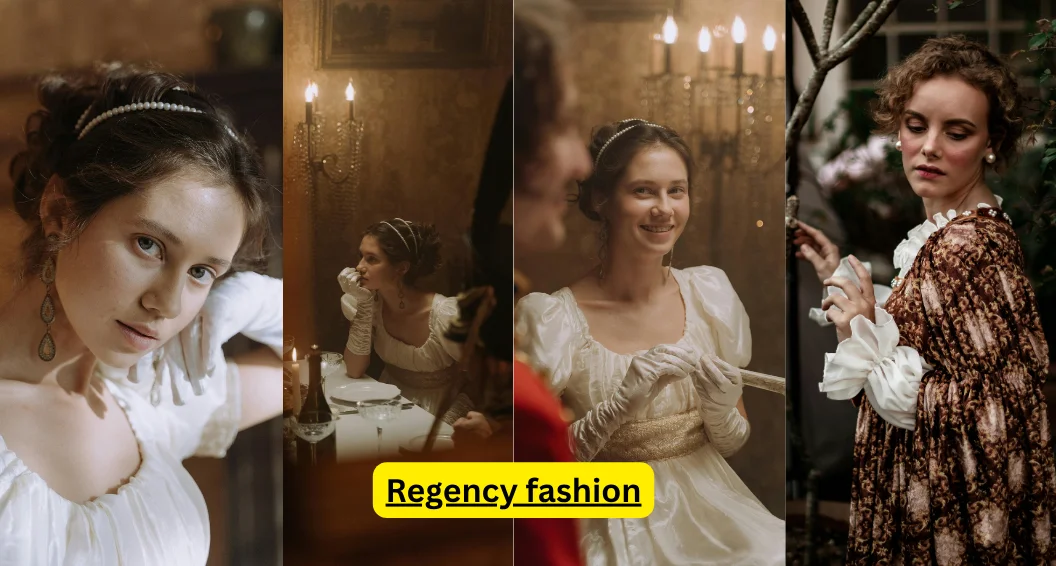
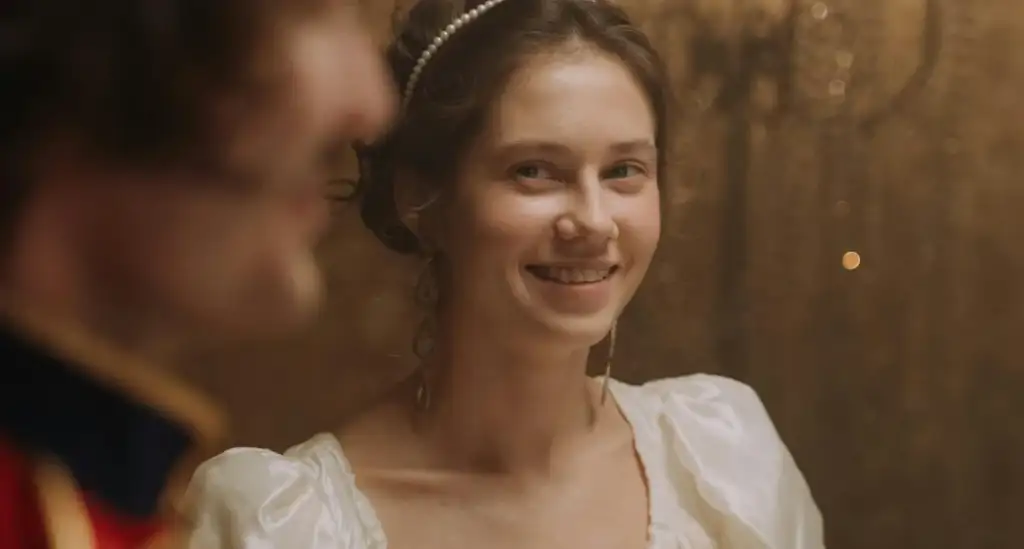
The silhouette moved upward. Waistlines rose to just below the bust. Skirts fell relatively straight, often to the floor, in lightweight fabrics like muslin and silk. The visual reference was ancient Greece and Rome. Clean lines, draped fabric, a suggestion of the natural body rather than an engineered reshaping of it.
What “Empire Waist” Actually Means
The term gets used loosely now, often applied to any dress with a raised waistline. Technically, empire waist refers specifically to this Regency/Napoleonic silhouette: waistline sitting directly under the bust, skirt falling from there relatively straight down.
The name comes from Napoleon’s French Empire, which was developing the same aesthetic simultaneously (and influencing it significantly through Joséphine Bonaparte’s famous wardrobe).
The reason this silhouette was considered more “natural” than its predecessor was that it didn’t require corsetry in the traditional sense. Lighter stays were worn, sometimes none at all for informal occasions, genuinely shocking by the standards of the previous century.
The Fabrics That Defined the Regency Wardrobe
Fabric choice in this period wasn’t just aesthetic. It was deeply tied to trade, politics, and technology. And getting the fabric right is the difference between an accurate Regency look and something that just has a high waistline.
The Muslim Obsession
White muslin was the defining fabric of the era, and the obsession was real. Thin, lightweight, almost transparent Indian muslin became so popular among fashionable women that it reportedly caused concern. Some contemporaries wrote about women dampening their muslin gowns to make them cling more closely to the body, classical-statue style.
Whether the “wet muslin” trend was as widespread as gossip suggested is debated by historians. But the fact that people talked about it tells you how central muslin was to the aesthetic.
The fabric came primarily from India, which made it politically interesting during the Napoleonic Wars, when British trade routes were complicated by conflict. Napoleon actually attempted to ban muslin imports to support French textile industries, which largely failed because French women wanted their muslin.
Silk, Satin, and Evening Wear
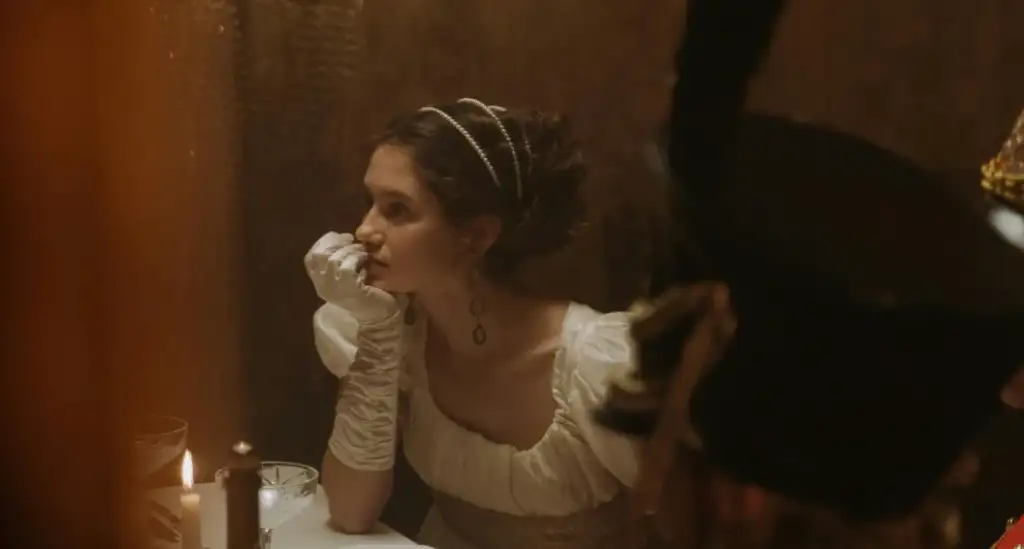
For formal occasions, muslin gave way to silk and satin. Evening gowns were often white or pale-coloured silk, sometimes with elaborate embroidered hems. Coloured gowns appeared too (gold, blue, deep green), but there was a strong cultural preference for white among unmarried women, connected to ideas of purity and marriageability.
Sarcenet (a soft silk), crepe, and velvet all appear in period fashion plates and surviving garments. The V&A Museum in London has an impressive collection of surviving Regency gowns if you want to see actual examples. The fabric quality on some pieces is still remarkable two centuries on.
The Problem With Reproductions
Here’s something that frustrated me when I started looking into this more seriously: most modern “regency-inspired” fabrics are completely wrong in weight and drape. The polyester-cotton blends used in many costume pieces don’t behave like muslin or silk. They create a stiffer, more artificial silhouette.
If you’re making or commissioning a regency costume for any purpose, genuine cotton voile, silk georgette, or lightweight linen will give you a far more accurate result. Yes, it costs more. But the difference in how the garment moves is immediately obvious.
Men’s Regency Fashion: The Part Everyone Forgets
Online searches for Regency clothing are overwhelmingly focused on women’s dress. Which is understandable given how visually dramatic the women’s silhouette was. But men’s fashion in this period was actually equally interesting, and arguably more influential on what we wear today.
The Birth of Modern Tailoring
Beau Brummell is the figure you need to know here. George Bryan “Beau” Brummell was a close friend of the Prince Regent and the most influential figure in early 19th-century men’s fashion by a considerable margin.
His revolution was one of restraint. Where aristocratic men had previously worn lace, embroidery, bright colours, and elaborate wigs, Brummell advocated for perfectly fitted dark wool coats, well-cut pantaloons or trousers, immaculate white linen, and above all, impeccable tailoring. The idea that a man’s clothes should fit so well that they required no ornament to look distinguished.
This is, more or less, the foundation of the modern suit. The line from Brummell to contemporary menswear is surprisingly direct.
Key Pieces of the Regency Man’s Wardrobe
- The tailcoat: Fitted through the body, cut away at the front, longer at the back. Initially for riding, then adopted for general fashionable wear.
- Pantaloons: Fitted trousers, often pale-coloured (buff, white, grey), worn with boots.
- The waistcoat: Worn under the tailcoat, often the one piece where a man could show some colour or pattern.
- The cravat: A white linen cloth tied around the neck in various elaborate styles. There were entire manuals published about cravat-tying. Brummell reportedly spent hours on his each morning.
- Hessian boots: Knee-high riding boots with a slight point and tassel at the top. Very much the statement footwear of the period.
Why This Still Matters
The reason men’s Regency fashion gets less coverage is that it evolved relatively continuously into what we recognise as modern Western menswear. The rupture in women’s fashion (from empire waist to Victorian crinolines to Edwardian corsets) was dramatic enough to make the Regency period feel like a distinct island. Men’s fashion flowed more continuously, making Brummell’s influence harder to spot, even though it’s arguably more pervasive.
Regency Fashion’s Surprising Modern Influence
When Bridgerton launched on Netflix in December 2020, searches for “regency fashion” increased by over 130% in the following month,h according to fashion search platform Lyst. That’s a significant real-world impact for a period drama.
But the influence was already building before that.
The Cottagecore Connection
The cottagecore aesthetic, which peaked in mainstream visibility around 2019-2021, shares significant DNA with Regency clothing. Lightweight fabrics, natural colours, empire or high waistlines, puffed sleeves, pastoral references. The overlap isn’t coincidental; cottagecore drew partly from romanticised 19th-century rural aesthetics, which included the early Regency period.
Brands like Batsheva and Cecilie Bahnsen produce contemporary pieces that reference empire silhouettes directly. You can find regency-adjacent shapes at multiple price points now. ASOS regularly carries empire-waist dresses, and independent makers on Etsy produce genuinely well-researched historical reproductions if you want something more accurate.

What Modern Designers Actually Borrow
When contemporary fashion references the Regency period, it tends to pick specific elements rather than full looks:
- Puffed or leg-of-mutton sleeves, a recurring trend across the last decade
- Empire waistlines on both dresses and separates
- Delicate embroidery and trim, particularly on necklines and hems
- White and cream as statement colours rather than basics
- Lightweight, floaty fabrics rather than structured or heavy materials
The mistake most people make when trying to “wear regency fashion now” is going full costume when selective incorporation is far more wearable and genuinely stylish.
How to Actually Wear Regency-Inspired Pieces Today
Right, practical application. Because the gap between admiring the aesthetic and actually wearing it without looking like you wandered off a film set is real.
Start With the Silhouette, Not the Details
The core regency silhouette (high waist, soft drape, relatively simple line) works in modern wardrobes when it’s not over-accessorised with period-specific details. An empire-waist dress in a solid modern colour reads as stylish, not costume. Add a lace bonnet and long gloves, and you’re in theatre territory.
Step 1: Find an empire-waist dress or top in a fabric with some drape (nothing stiff). Step 2: Pair it with genuinely modern shoes. This is the single most important grounding element. Step 3: Keep accessories minimal and contemporary. Step 4: Let the silhouette do the work.
The Sleeve Question
Regency sleeves ranged from short and puffed (informal daywear) to long (cooler weather or formal occasions). The short puffed sleeve is the element that most consistently translates to modern fashion, as it’s appeared repeatedly in recent collections from Zimmermann, Erdem, and high street brands alike.
If full puffed sleeves feel like too much, a subtle gathered or slightly exaggerated shoulder on an otherwise simple dress achieves a similar effect without committing fully.
What Didn’t Work For Me
I tried pairing a proper empire-waist white cotton dress with a pair of Chelsea boots once, going for that “modern meets historical” look. The result was strange in a way I couldn’t fix. The problem, I eventually worked out, was proportion: the boots’ ankle height cut the leg in a way that emphasised rather than grounded the historical silhouette.
Knee-high boots or simple flat sandals worked much better. Something about how they related to the hemline felt more cohesive.
The Accessories and Undergarments That Made It Work
You can’t fully understand the look without understanding what was happening underneath, and what was worn on top as the weather required.
Stays vs. Corsets
Short stays (lighter, less structured than Victorian corsets) were common in the Regency period, particularly for informal daywear. They provided a degree of support without dramatically reshaping the body. Some women wore no stays at all for morning or informal occasions, which was genuinely unprecedented.
For formal wear, more structured stays were still used, as the completely unstructured silhouette is somewhat mythologised. But the reduction in boning and restriction compared to the previous century was dramatic and real.
The Spencer Jacket and Pelisse
Because empire-waist gowns left significant skin and thin fabric exposed to British weather (which is what it always was), short jackets and outer garments were standard. The Spencer jacket (cropped to just below the bust, fitted) is the most famous. Worn over a gown, it preserved the high-waist silhouette while providing warmth.
The pelisse was a longer coat-style garment, similarly cut to follow the empire-waist line. Think of it as the Regency overcoat.
Both translate interestingly to modern fashion, as the cropped jacket over a high-waisted dress is a configuration you’ll see on contemporary runways regularly without anyone necessarily connecting it to 1815.
Bottom Line?
Regency fashion was genuinely revolutionary for its time, a dramatic simplification that rejected the artifice of the previous century in favour of something that felt (and in many ways was) more natural. The empire waist, lightweight fabrics, Neoclassical references, Brummell’s tailoring philosophy: these weren’t just aesthetic choices. They reflected real shifts in how people thought about the body, about class, about politics.
The reason it keeps coming back is that the core silhouette is genuinely flattering and wearable. Not in a costume way. In a “this works with what I own” way, if you approach it selectively.
Pick one element (the waistline, the sleeve shape, the fabric weight) and build from there. You don’t need a full look to engage with the aesthetic. And if you’re building a more complete reproduction for a costume or historical event, invest in the right fabrics. That’s the single biggest difference between something that reads as authentic and something that reads as fancy dress.
What element of Regency fashion are you most drawn to? Drop your thoughts below, as I’m always curious what pulls people to this particular era.
FAQs About Regency Fashion
1. What is Regency fashion known for?
Regency fashion is known for empire waist dresses, lightweight fabrics, and simple, elegant silhouettes inspired by ancient Greek and Roman styles.
2. Why were empire waist dresses popular?
Empire waist dresses were popular because they created a natural, comfortable silhouette and moved away from heavy corsets and structured clothing.
3. Can you wear Regency fashion today?
Yes, you can wear Regency-inspired fashion by choosing empire waist dresses, soft fabrics, and minimal accessories for a modern look.
4. What fabrics were used in Regency fashion?
Common fabrics included muslin, silk, satin, and lightweight cotton, which created the soft and flowing look of the era.
5. How is Regency fashion different from Victorian fashion?
Regency fashion focused on simple, high-waist silhouettes, while Victorian fashion used heavier fabrics and structured designs like corsets and crinolines.