Share This Article
There’s something about Regency era fashion that gets under your skin. Maybe it’s the empire waistlines that look effortlessly elegant. Maybe it’s the way those muslin gowns seem to float. Or maybe, after watching Bridgerton for the third time, you just need someone to explain what was actually going on with those clothes.
I fell down this rabbit hole a few years ago while researching historical costume for a themed event. What started as a quick Google search turned into weeks of reading, pattern hunting, and more than one impulsive fabric purchase. And I learned a lot that most articles skip right over.
Regency era fashion (roughly 1795–1825) sits in this fascinating gap between the powdered-wig excess of the 18th century and the corseted rigidity of the Victorian age. It was, weirdly, one of the most “relaxed” periods in Western fashion history. And it deserves a proper breakdown.
What Actually Defined Regency Era Fashion
Most people picture the high waist and call it a day. But there’s so much more happening.
The Empire Silhouette Changed Everything
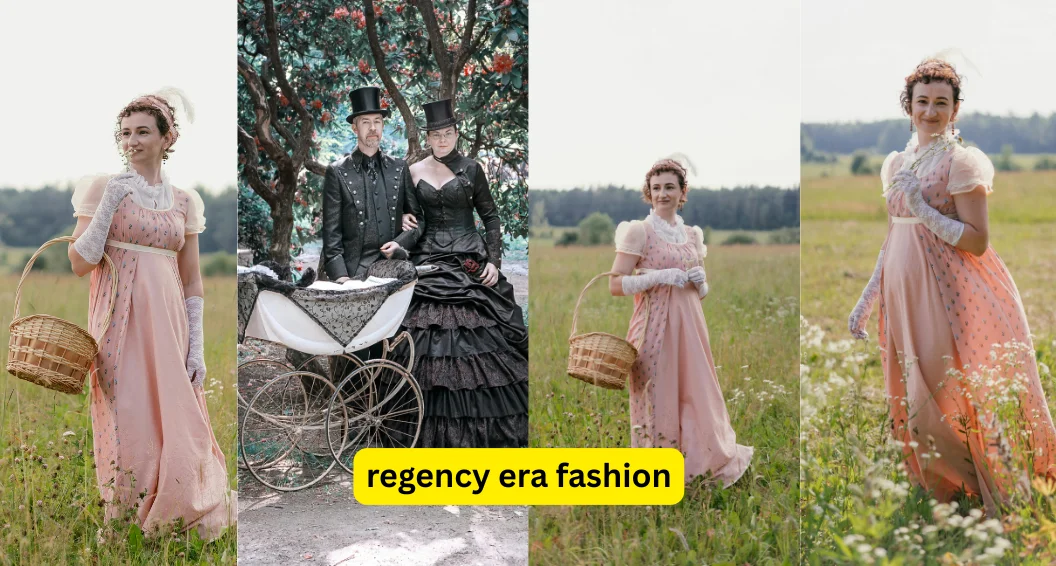
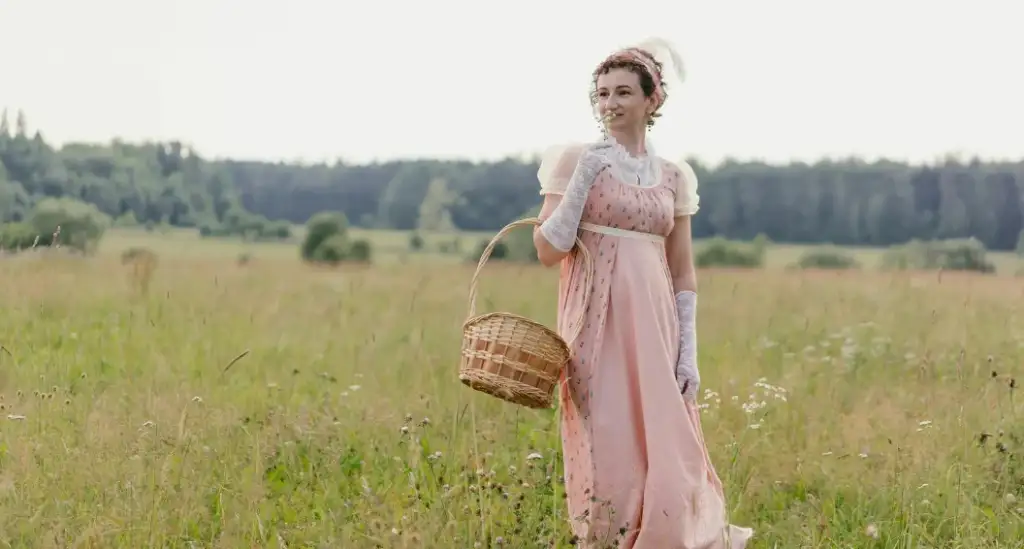
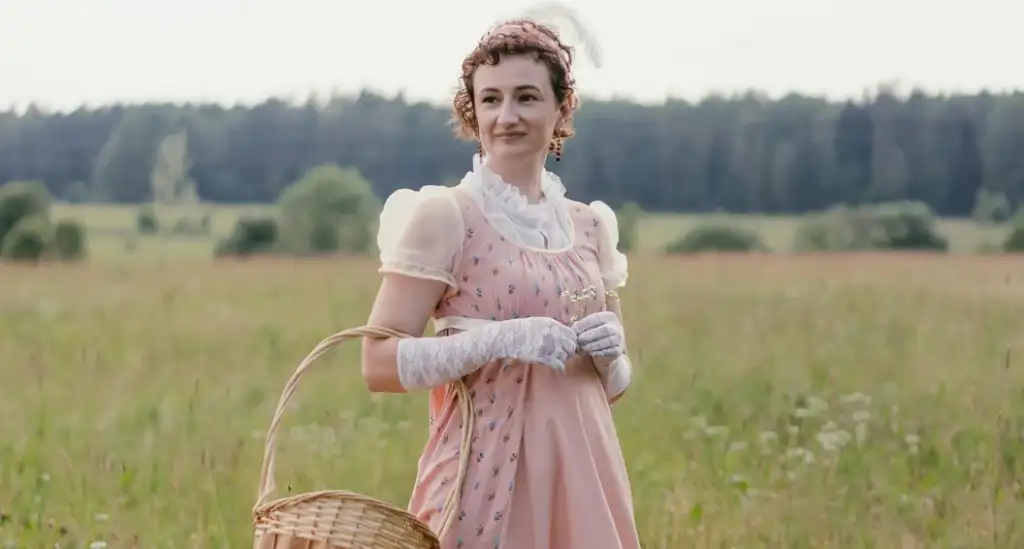
The defining shape of this period is the empire silhouette: a dress with a waistline sitting just below the bust, then flowing straight down to the floor. It is easy, yet the impact is dramatic. The body looks longer. Movement becomes graceful rather than stiff.
This was a direct reaction to the previous century. Georgian fashion was built around massive pannier skirts, tight stomachers, and layers that required a team of servants to put on. By the 1790s, women (especially those influenced by French revolutionary ideals) wanted something different. Lighter. Freer.
The empire waist solved two problems at once: it eliminated the constricting stays around the natural waist, and it allowed for lighter, cheaper fabrics to look luxurious.
Fabric Choices Were Deliberate, and Political
Here’s what surprised me most during my research: the choice of muslin wasn’t just aesthetic. It was cultural.
Lightweight white muslin, often imported from India, became the fabric of choice for fashionable women. It was sheer enough to drape beautifully but required careful layering underneath. Some historical accounts describe women dampening their muslin gowns to make them cling, a practice that was almost certainly exaggerated by moralists of the time, but the image stuck.
White and pale pastels dominated because they referenced classical antiquity. After the French Revolution, both France and Britain were obsessed with ancient Greek and Roman aesthetics. Wearing white muslin was essentially saying I’ve read my classical history and I have sophisticated taste.
Silk, satin, and velvet appeared for evening wear and colder months. Net and lace overlays added texture without sacrificing the clean silhouette.
The Role of Stays and Undergarments
Forget everything you think you know about historical corsets. Regency stays were genuinely different.
They were shorter, less rigid, and designed to lift and support rather than cinch. Made from lighter materials with less boning than their predecessors, they sat under the bust and allowed the empire waist dress to fall naturally. Women could actually breathe.
That said, they weren’t nothing. A well-fitted pair of Regency stays still shaped the torso. They just did it more gently. Think supportive structure rather than ca age.
Under the dress, women wore a chemise (a loose linen undergarment), the stays, and sometimes a petticoat for warmth. The whole ensemble was considerably less complicated than what came before or after.
Men’s Fashion in the Regency Period (Often Overlooked)
Everyone talks about the women’s gowns. But Regency menswear was having its own quiet revolution.
Beau Brummell and the Birth of the Modern Suit
You can’t discuss Regency men’s fashion without talking about George Bryan “Beau” Brummell. This man single-handedly shifted what it meant to dress well.
Before Brummell, aristocratic men wore embroidered coats, silk stockings, powdered wigs, and heels. It was decorative to an extreme. Brummell rejected all of it. He championed clean lines, perfect tailoring, and immaculate personal hygiene, which was, genuinely, radical at the time.
His signature look: a dark tailcoat, light-colored pantaloons or breeches, a crisp white cravat tied with precise folds, and polished Hessian boots. No embroidery. No bright colors. Just flawless fit.
This is directly ancestral to the modern suit. When you see a well-tailored dark jacket and trousers today, you’re looking at Brummell’s legacy.
Tailcoats, Waistcoats, and the Cravat
The tailcoat was the essential outer garment. Cut away at the front to reveal the waistcoat beneath, with long tails at the back, it required a skilled tailor to fit properly. Men took this seriously; reportedly, Brummell spent hours achieving the perfect cravat fold.
Waistcoats offered the one opportunity for color and pattern. A man might wear a conservative dark coat with a striped or embroidered waistcoat beneath, a flash of personality within an otherwise restrained outfit.
Cravat tying was genuinely considered an art. There were published guides. Named styles. Men who couldn’t tie a proper cravat were considered unfashionable regardless of how expensive their coat was.
Accessories That Completed the Regency Look
The clothes were only part of it. Accessories carried enormous social weight.
Reticules, Gloves, and Fans
Because the empire silhouette offered no room for pockets (a problem women are still complaining about), the reticule emerged: a small drawstring bag carried in the hand. It held a handkerchief, smelling salts, coins, and sometimes a visiting card. Reticules were embroidered, beaded, or made from silk, and matching them to your gown was a genuine consideration.
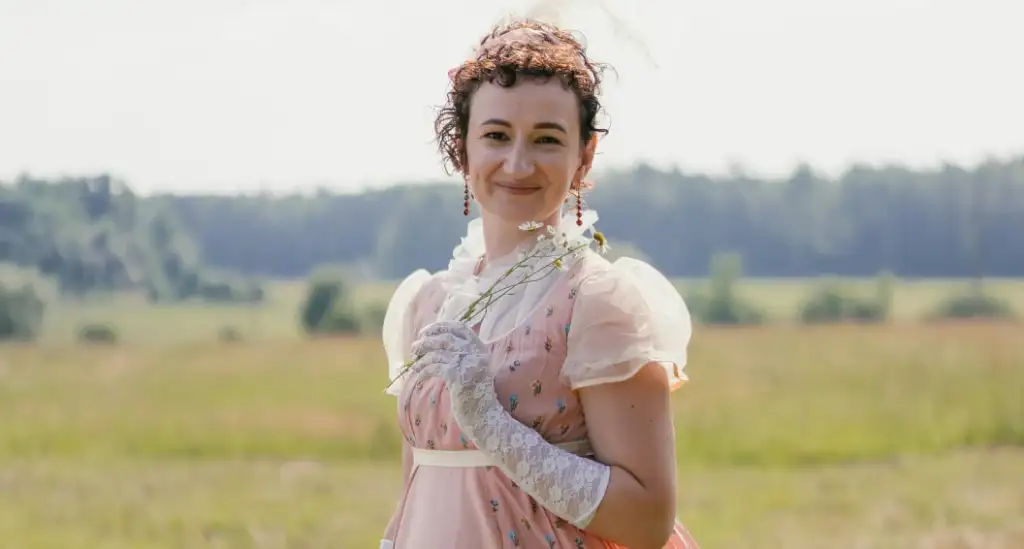
Gloves were non-negotiable. Long gloves for evening, shorter ones for day. Removing a glove to shake hands was a deliberate social signal. Wearing them was expected everywhere.
Fans remained fashionable from the previous century and continued into the Regency. A skilled woman could communicate volumes with a fan, or so the etiquette books claimed. In practice, they were useful for cooling down in crowded rooms and giving your hands something to do during awkward conversations.
Headwear: Bonnets, Turbans, and Caps
Outdoors, women wore bonnets. The Regency bonnet evolved over the period: early versions had wider brims that framed the face, later versions developed the deep poke shape that almost obscured the face from the side.
Indoors and for the evening, turbans became fashionable, particularly influenced by Napoleon’s Egyptian campaigns, which sparked a broader Orientalist aesthetic trend across Europe. A well-draped turban with a feather or jeweled pin was considered extremely chic.
Older women and married women at home wore caps, lightweight linen or lace coverings that indicated respectability and domestic status.
Jewelry: Restraint Was the Point
After the excess of the Georgian period, Regency jewelry leaned toward restraint. Long chains (particularly gold), cameos, pearl sets, and simple drop earrings were fashionable. The goal was elegance, not display.
Hair jewelry (lockets containing a lock of hair from a loved one) was both fashionable and sentimental. These pieces had genuine emotional weight for the people who wore them.
How Regency Fashion Varied by Class and Context
This is where most articles go vague. The reality is that Regency fashion looked very different depending on who was wearing it.
The Upper Class: The Fashion Plates
What we see in fashion plates (the illustrated fashion magazines of the period) represents the absolute pinnacle of fashionable dress, worn by wealthy women in London during the Season. These are the white muslin gowns, the perfectly matched accessories, the costly silks.
Upper-class women might change clothes three to four times a day: a morning dress for domestic activities, a walking dress for afternoon calls or a stroll in the park, an evening dress for dinner or a ball. Each category had its own rules about fabric, decoration, and appropriate accessories.
Middle-Class Adaptations
Genteel middle-class women followed the same silhouette but used more modest fabrics. Cotton prints rather than fine muslin. Simpler trimmings. Gowns that served double duty rather than having a separate wardrobe for each occasion.
The Spencer jacket (a short, fitted jacket that ended at the empire waist) was enormously practical and popular across class lines. It provided warmth without disrupting the silhouette. Worn over a muslin gown, it made an inherently flimsy garment wearable in an English climate.
Working-Class Dress
Working women wore simplified versions of the fashionable silhouette: shorter skirts that didn’t drag, sturdy fabrics, and practical colors. The empire waist trickled down in a simplified form, but practicality overrode fashion.
What’s interesting is how quickly fashion information traveled. Chapbooks, printed images, and the movement of servants between households meant that the fashionable silhouette was known and adapted even by women who could never afford the original version.
The Regency Influence on Modern Fashion
This is the part that actually surprised me when I started connecting dots.
Direct Descendants in Contemporary Design
Empire-waist Regency dresses come back into fashion every few years. You’ll see them in bridal wear consistently, as the silhouette is genuinely flattering across body types because the emphasis falls at the narrowest point just below the bust rather than at the natural waist.
The clean tailoring principles Brummell championed are woven into every contemporary suit. The idea that fit matters more than decoration, that restraint reads as sophistication, is a direct Regency inheritance.
Maximalist accessories on a minimal base? That’s Regency logic. A simple white dress with elaborate jewelry and a statement headpiece.
Why Bridgerton Got Some Things Right (and Some Things Wrong)
I know you’re thinking about it. The Netflix series sparked a genuine renewed interest in this period, and I think that’s mostly good. The colors are more saturated than historical accuracy would suggest, the corsets are drawn tighter than Regency stays actually were, and some of the gowns are more Victorian in silhouette.
But the general aesthetic (the emphasis on light fabrics, the empire waist, the layering of textures, the social significance of dress) has elements that are grounded in reality. The show did genuine costume research, even when it made deliberate anachronistic choices for visual impact.
How to Incorporate Regency Style Today
You don’t need a ball invitation to wear this aesthetic.
- Empire-waist dresses are available from countless contemporary brands. Look for ones with a seam just below the bust and a flowing skirt.
- Delicate jewelry (thin gold chains, cameos, pearl drops) is having a genuine moment right now and overlaps perfectly with Regency Era Fashion aesthetics.
- Structured short jackets worn over Regency dresses echo the Spencer. A cropped blazer over a flowy dress hits the same visual note.
- For a more committed take, check out historical costume communities online. Independent pattern makers are selling accurate Regency patterns, and the community is genuinely welcoming.
Bottom Line
Regency era fashion was a genuine turning point in Western clothing. It stripped away centuries of structural excess and found something cleaner: a silhouette that referenced antiquity, worked with the body rather than against it, and established principles of tailoring and restraint that we’re still working with today.
If you’re researching it for a costume, drawing on it for modern style inspiration, or just deeply invested in understanding why those Regency dresses look the way they do, the more you dig, the more interesting it gets.
What aspect of Regency fashion surprised you most? Drop a comment. I’m always curious what pulls people into this rabbit hole.
FAQ
1. What is Regency era fashion known for?
Regency era fashion is known for its empire waist Regency dresses, lightweight fabrics like muslin, and a natural silhouette that replaced the heavy, structured styles of the 18th century.
2. Did women wear corsets during the Regency period?
Yes, but Regency stays were softer and shorter than traditional corsets. They supported the bust without tightly cinching the waist, allowing more comfort and natural movement.
3. What fabrics were popular in Regency fashion?
Lightweight muslin was the most popular, often in white or pastel shades. Silk, satin, and velvet were also used for evening wear and colder seasons.
4. How did men dress in the Regency era?
Men wore tailored tailcoats, waistcoats, cravats, and fitted trousers. Influenced by Beau Brummell, the style focused on clean lines, a perfect fit, and minimal decoration.
5. Is Regency fashion still relevant today?
Yes, modern fashion often revives empire waist dresses, minimal tailoring, and delicate accessories inspired by Regency style, especially in bridal and summer collections.